แบนเนอร์
บ้าน

อุปกรณ์ทดสอบอุณหภูมิ

อุปกรณ์ทดสอบอุณหภูมิ

  • Small Rapid Temperature Change (Wet Heat) Test Chamber
    Nov 01, 2025
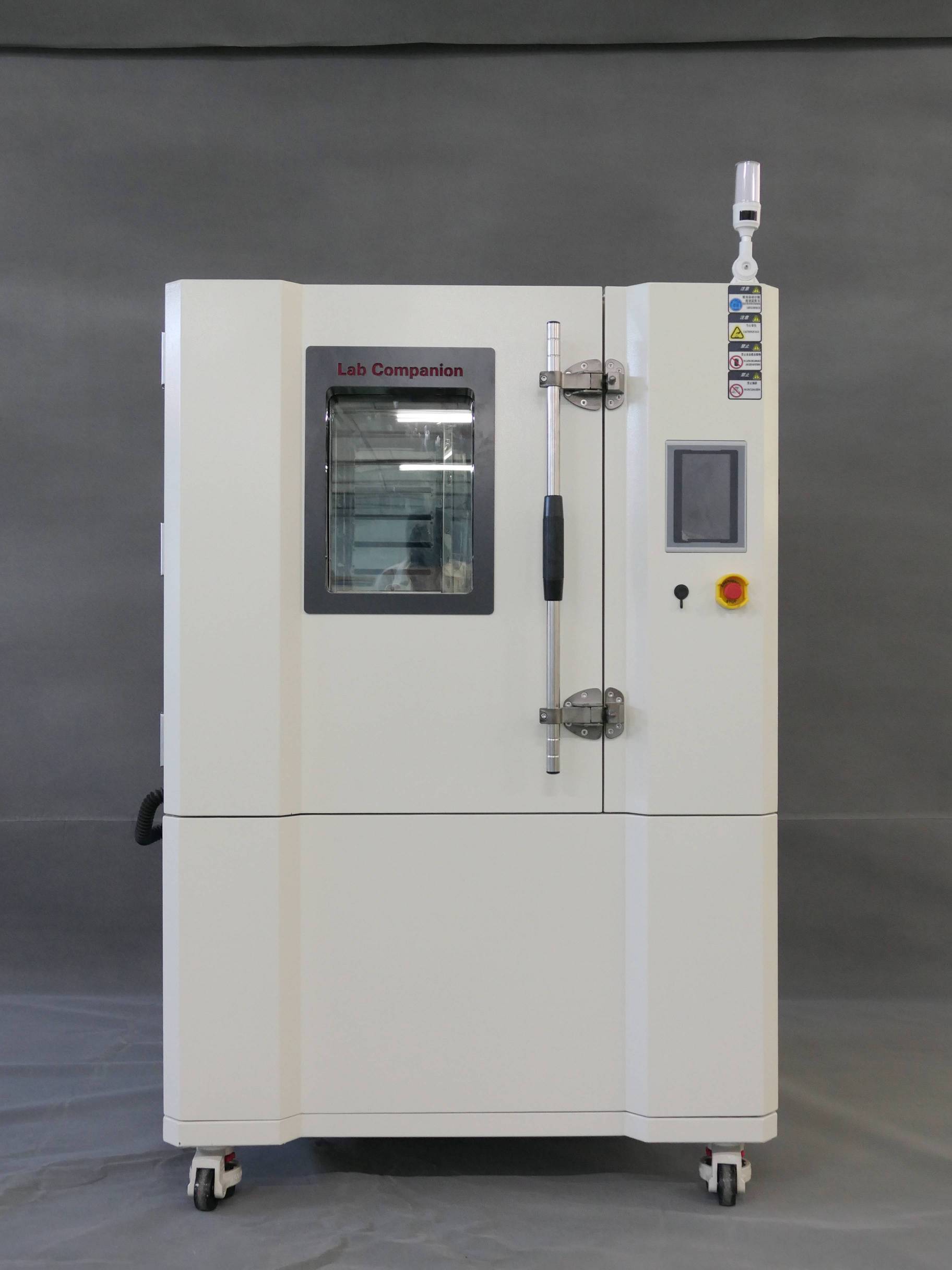
    In response to the testing and R&D requirements of electronic components such as semiconductors and automotive electronics, Lab Companion has developed a smaller capacity small rapid temperature change (wet heat) test chamber. While maintaining the advantages of standard rapid temperature change test chambers, it can also meet the needs of customers who have requirements for space size, with a single-phase 220VAC voltage specification. It can also meet the equipment usage requirements of customers in civilian office areas such as research institutions and universities. Its main features are as follows: 1. It has powerful heating and cooling performance 2. Heating rate: 15℃/min; Cooling rate: 15℃/min 3. (Temperature range: -45℃ to +155℃) 4. Single-phase 220VAC, meeting the electricity demands of more customers 5. Single-phase 220VAC, suitable for industrial and civil power supply specifications, can meet the equipment power demands of customers in civil office areas such as research institutions and universities. 6. The body is small and exquisite, with a compact structure and easy to move 7. The miniaturized structure design of the test chamber can effectively save configuration space. 8. The inner tank volume is 100L, the width is 600mm, the depth is less than 1400mm, and the product volume is less than 1.1m ³. It is suitable for the vast majority of residential and commercial elevators in China (GB/T7025.1). 9. The standard universal wheels enable the product to move freely at the installation site. 10. Standard air-cooled specification is provided, facilitating the movement and installation of the product 11. At the same time, it saves customers the cost and space of configuring cooling towers. 12. A more ergonomic operation touch screen design 13. Through the multi-angle adjustment of the touch screen, it can meet the operation needs and provide the best field of vision for users of different heights, making it more convenient and comfortable. 14. Energy-saving cold output temperature and humidity control system, with dual PID and water vapor partial pressure control, features mature technology and extremely high precision. 15. Network control and data acquisition can be carried out through the interface (RS-485/GPIB/Web Lan/RS-232C). 16. It is standard-equipped with left and right cable holes (50mm), which facilitates the connection of power on the sample and the conduct of multiple measurements. 17. The controller adopts a color LCD touch screen, which is simple and convenient to operate 18. Through the controller, two control methods, fixed value and program, can be selected to adapt to different applications. 19. The program control can be set to 100 modes, with 99 steps for each mode. Repeat the loop up to 999 times. 20. Multiple languages can be easily switched (Simplified Chinese, English), and test data can be stored on a USB flash drive.
    อ่านเพิ่มเติม
  • Flame-retardant PP Materials in Industry Working Principle
    Oct 27, 2025
    Polypropylene (PP) itself is a highly flammable hydrocarbon with a limiting oxygen index (LOI) of only 17.8%. It will continue to burn even after being removed from the fire source. The core principle of flame-retardant PP is to interrupt or delay its combustion cycle through physical and chemical means. Combustion requires the simultaneous existence of three elements: combustible material, heat and oxygen. The function of flame retardants is to destroy this "burning triangle".   In industry, flame retardancy is mainly achieved by adding flame retardants to PP. Different types of flame retardants function through the following mechanisms: 1. Gas-phase flame retardant mechanism This is one of the most common mechanisms, especially applicable to traditional halogen-based flame retardants. When flame retardants are heated and decomposed, they can capture the free radicals (such as H· and HO·) that maintain the combustion chain reaction in the combustion reaction zone (flame), causing their concentrations to drop sharply and thus interrupting the combustion. 2. Condensed phase flame retardant mechanism This is the most mainstream mechanism of halogen-free flame-retardant PP. Flame retardants promote the formation of a uniform and dense carbon layer on the surface of polymers. This layer of carbon has three major functions. The first step is to prevent external heat from entering the interior of the polymer. Secondly, it prevents the escape of flammable gases inside and the entry of external oxygen. Finally, it inhibits the further pyrolysis of the polymer and the generation of smoke. When a fire occurs, the acid source promotes the dehydration, cross-linking and carbonization of the carbon source. Meanwhile, the large amount of gas produced by the decomposition of the gas source causes the softened carbon layer to expand, eventually forming a porous, dense and strong foam carbon layer, which protects the underlying PP like "armor". 3. Cooling/heat absorption mechanism Flame retardants absorb a large amount of heat during the decomposition process, reducing the surface temperature of polymers and making it difficult for them to continuously pyrolyze and produce flammable gases. Typical representatives include aluminium hydroxide (ATH) and magnesium hydroxide (MH). When they decompose, they absorb a large amount of heat (endothermic reaction) and release water vapor. The water vapor can not only dilute flammable gases but also play a cooling role. 4. Dilution mechanism Flame retardants decompose to produce a large amount of non-flammable gases (such as water vapor and CO₂, etc.), which can dilute the concentration of flammable gases and oxygen near the polymer surface, making combustion unsustainable. Both the gas sources of metal hydroxides and intumescent flame retardants have this function.   In conclusion, the working principle of flame-retardant PP in industry is a complex process involving the synergy of multiple mechanisms. Modern flame-retardant PP technology is developing towards halogen-free, low smoke, low toxicity and high efficiency. Among them, the condensed phase flame-retardant mechanism represented by intumescent flame retardants (IFR) is the core of current research and application. By carefully designing flame-retardant formulas, the best balance can be achieved among flame-retardant efficiency, material mechanical properties, processing performance and cost.
    อ่านเพิ่มเติม

  • How is over-temperature protection carried out in a temperature test chamber?
    Oct 23, 2025
    The over-temperature protection of the temperature test chamber is a multi-level and multi-redundant safety system. Its core purpose is to prevent the temperature inside the chamber from rising out of control due to equipment failure, thereby protecting the safety of the test samples, the test chamber itself and the laboratory environment.   The protection system usually consists of the following key parts working together: 1. Sensor: The main sensor is used for the normal temperature control of the test chamber and provides feedback signals to the main controller. An independent over-temperature protection sensor is the key to a safety system. It is a temperature-sensing element independent of the main control temperature system (usually a platinum resistance or thermocouple), which is placed by strategically at the position within the box that best represents the risk of overheating (such as near the heater outlet or on the top of the working chamber). Its sole task is to monitor over-temperature. 2. Processing unit: The main controller receives signals from the main sensor and executes the set temperature program. The independent over-temperature protector, as an independent hardware device, is specifically designed to receive and process the signals from the over-temperature protection sensor. It does not rely on the main controller. Even if the main controller crashes or experiences a serious malfunction, it can still operate normally. 3. Actuator: The main controller controls the on and off of the heater and the cooler. The safety relay/solid-state relay receives the signal sent by the over-temperature protector and directly cuts off the power supply circuit of the heater. This is the final execution action.   The over-temperature protection of the temperature test chamber is a multi-level, hard-wire connected safety system designed based on the concepts of "redundancy" and "independence". It does not rely on the main control system. Through independent sensors and controllers, when a dangerous temperature is detected, it directly and forcibly cuts off the heating energy and notifies the user through sound and light alarms, thus forming a complete and reliable safety closed loop.
    อ่านเพิ่มเติม
  • หลักการปรับสมดุลอุณหภูมิภายในห้องทดสอบด้วยวาล์วอากาศ
    Sep 22, 2025
    หลักการสำคัญคือระบบป้อนกลับเชิงลบแบบวงปิดที่ควบคุม "ความร้อน - การวัด - การควบคุม" กล่าวโดยง่ายคือการควบคุมกำลังขององค์ประกอบความร้อนภายในกล่องอย่างแม่นยำ เพื่อต่อต้านการกระจายความร้อนที่เกิดจากสภาพแวดล้อมภายนอก เพื่อรักษาอุณหภูมิทดสอบให้คงที่สูงกว่าอุณหภูมิแวดล้อม กระบวนการที่วาล์วอากาศรักษาอุณหภูมิให้คงที่นั้นเป็นกระบวนการวงปิดแบบไดนามิกและปรับอย่างต่อเนื่อง: ขั้นแรก ให้ตั้งค่าอุณหภูมิเป้าหมาย เซ็นเซอร์วัดอุณหภูมิจะวัดอุณหภูมิจริงภายในกล่องแบบเรียลไทม์ และส่งสัญญาณไปยังตัวควบคุม PIDเมื่อตัวควบคุม PID คำนวณค่าความผิดพลาด ก็จะคำนวณกำลังความร้อนที่ต้องปรับตามค่าความผิดพลาดผ่านอัลกอริทึม PID โดยอัลกอริทึมจะพิจารณาปัจจัยสามประการP (สัดส่วน) : ค่าความผิดพลาดของกระแสไฟฟ้ามีขนาดใหญ่เท่าใด ยิ่งค่าความผิดพลาดมากเท่าใด ช่วงการปรับกำลังความร้อนก็จะกว้างขึ้นเท่านั้นI (ปริพันธ์) : การสะสมของข้อผิดพลาดในช่วงระยะเวลาหนึ่ง ใช้เพื่อกำจัดข้อผิดพลาดแบบคงที่ (เช่น หากมีความคลาดเคลื่อนเล็กน้อยอยู่เสมอ เทอมปริพันธ์จะค่อยๆ เพิ่มกำลังเพื่อกำจัดข้อผิดพลาดนั้นให้หมดไป)D (ดิฟเฟอเรนเชียล) : อัตราการเปลี่ยนแปลงของค่าความคลาดเคลื่อนของกระแสไฟฟ้า หากอุณหภูมิใกล้ถึงเป้าหมายอย่างรวดเร็ว ระบบจะลดกำลังความร้อนล่วงหน้าเพื่อป้องกัน "โอเวอร์ชูต"3. ตัวควบคุม PID ส่งสัญญาณที่คำนวณแล้วไปยังตัวควบคุมกำลังขององค์ประกอบความร้อน (เช่น รีเลย์โซลิดสเตต SSR) เพื่อควบคุมแรงดันไฟฟ้าหรือกระแสไฟฟ้าที่ใช้กับลวดความร้อนอย่างแม่นยำ จึงควบคุมการสร้างความร้อนได้4. พัดลมหมุนเวียนทำงานอย่างต่อเนื่องเพื่อให้แน่ใจว่าความร้อนที่เกิดจากความร้อนจะกระจายอย่างรวดเร็วและสม่ำเสมอ ขณะเดียวกันยังส่งสัญญาณการเปลี่ยนแปลงของเซ็นเซอร์อุณหภูมิกลับไปยังตัวควบคุมอย่างรวดเร็ว ทำให้ระบบตอบสนองได้ทันท่วงที ตัวปรับสมดุลวาล์วลมจะวัดปริมาตรอากาศ ในขณะที่ความหนาแน่นของอากาศจะแปรผันตามอุณหภูมิ ภายใต้ค่าความดันแตกต่างเดียวกัน อัตราการไหลของมวลหรืออัตราการไหลของปริมาตรที่สอดคล้องกับอากาศที่มีความหนาแน่นต่างกันจะแตกต่างกัน ดังนั้น อุณหภูมิจึงต้องคงที่ที่ค่าคงที่ที่ทราบ เพื่อให้ไมโครโปรเซสเซอร์ภายในเครื่องมือสามารถคำนวณค่าปริมาตรอากาศได้อย่างแม่นยำภายใต้สภาวะมาตรฐานโดยอ้างอิงจากค่าความดันแตกต่างที่วัดได้โดยใช้สูตรที่ตั้งไว้ หากอุณหภูมิไม่คงที่ ผลการวัดจะไม่น่าเชื่อถือ
    อ่านเพิ่มเติม
  • หลักการทำงานของเครื่องทำความเย็นแบบอัดอากาศระบายความร้อนด้วยอากาศ Lab Companion หลักการทำงานของเครื่องทำความเย็นแบบอัดอากาศระบายความร้อนด้วยอากาศ Lab Companion
    Sep 06, 2025
    1.การบีบอัดสารทำความเย็นที่เป็นก๊าซอุณหภูมิต่ำและความดันต่ำจะไหลออกจากเครื่องระเหยและถูกคอมเพรสเซอร์ดูดเข้าไป คอมเพรสเซอร์จะทำงานกับก๊าซส่วนนี้ (ใช้พลังงานไฟฟ้า) และบีบอัดอย่างรุนแรง เมื่อสารทำความเย็นเปลี่ยนเป็นไอร้อนยวดยิ่งที่มีอุณหภูมิสูงและความดันสูง อุณหภูมิของไอจะสูงกว่าอุณหภูมิแวดล้อมมาก ทำให้เกิดสภาวะที่ความร้อนจะถูกระบายออกสู่ภายนอก2. การควบแน่นไอสารทำความเย็นอุณหภูมิสูงและแรงดันสูงจะเข้าสู่คอนเดนเซอร์ (โดยปกติจะเป็นตัวแลกเปลี่ยนความร้อนแบบท่อครีบที่ประกอบด้วยท่อทองแดงและครีบอะลูมิเนียม) พัดลมจะบังคับให้อากาศภายนอกพัดผ่านครีบคอนเดนเซอร์ จากนั้นไอสารทำความเย็นจะปล่อยความร้อนให้กับอากาศที่ไหลอยู่ภายในคอนเดนเซอร์ เนื่องจากการระบายความร้อน ไอสารทำความเย็นจะค่อยๆ ควบแน่นจากสถานะก๊าซไปเป็นของเหลวที่มีอุณหภูมิปานกลางและแรงดันสูง ณ จุดนี้ ความร้อนจะถูกถ่ายโอนจากระบบทำความเย็นไปยังสภาพแวดล้อมภายนอก3. การขยายตัวสารทำความเย็นเหลวที่มีอุณหภูมิปานกลางและแรงดันสูงจะไหลผ่านช่องแคบผ่านอุปกรณ์ควบคุมแรงดัน ซึ่งทำหน้าที่ควบคุมและลดแรงดัน คล้ายกับการใช้นิ้วปิดรูท่อน้ำ เมื่อแรงดันของสารทำความเย็นลดลงอย่างกะทันหัน อุณหภูมิก็จะลดลงอย่างรวดเร็วเช่นกัน กลายเป็นส่วนผสมสองเฟสของก๊าซและของเหลวที่มีอุณหภูมิต่ำและความดันต่ำ (หมอก)4. การระเหยส่วนผสมของก๊าซและของเหลวที่มีอุณหภูมิต่ำและความดันต่ำจะเข้าสู่เครื่องระเหย และพัดลมอีกตัวหนึ่งจะหมุนเวียนอากาศภายในกล่องผ่านครีบของเครื่องระเหยที่เย็น ของเหลวสารทำความเย็นจะดูดซับความร้อนของอากาศที่ไหลผ่านครีบในเครื่องระเหย ระเหยและกลายเป็นไออย่างรวดเร็ว และเปลี่ยนกลับเป็นก๊าซอุณหภูมิต่ำและความดันต่ำ เนื่องจากการดูดซับความร้อน อุณหภูมิของอากาศที่ไหลผ่านเครื่องระเหยจึงลดลงอย่างมาก ส่งผลให้ห้องทดสอบเย็นลง จากนั้น ก๊าซอุณหภูมิต่ำและความดันต่ำนี้จะถูกดึงกลับเข้าไปในคอมเพรสเซอร์อีกครั้ง เพื่อเริ่มต้นวงจรถัดไป ด้วยวิธีนี้ วงจรจะวนซ้ำไปซ้ำมาอย่างไม่มีที่สิ้นสุด ระบบทำความเย็นจะ "เคลื่อนย้าย" ความร้อนภายในกล่องออกสู่ภายนอกอย่างต่อเนื่อง และกระจายความร้อนออกสู่บรรยากาศผ่านพัดลม
    อ่านเพิ่มเติม

ฝากข้อความ

ฝากข้อความ
หากคุณสนใจผลิตภัณฑ์ของเราและต้องการทราบรายละเอียดเพิ่มเติม โปรดฝากข้อความไว้ที่นี่ เราจะตอบกลับคุณโดยเร็วที่สุด
ส่ง

บ้าน

สินค้า

วอทส์แอพพ์

ติดต่อเรา